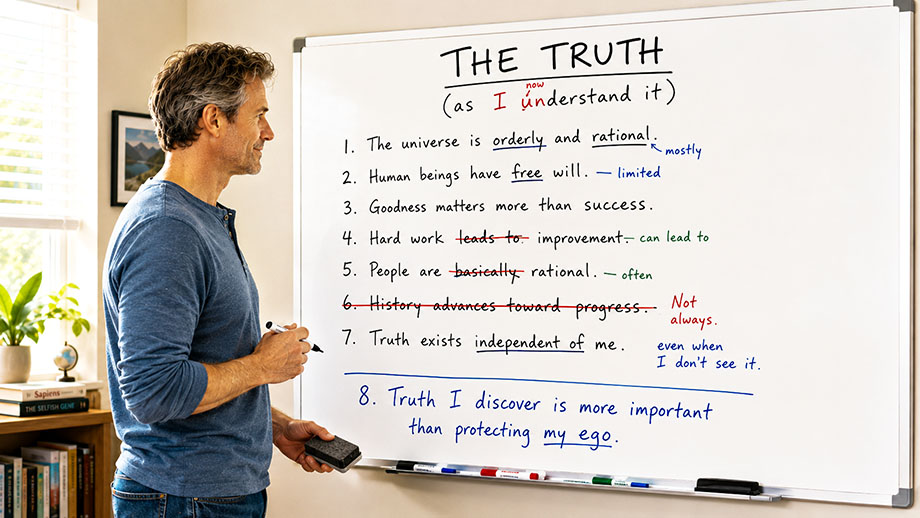
By the time I was in college, I knew everything. My beliefs about politics and theology and society were firmly fixed. I’d been taught almost everything and I figured out the rest.
Or so I thought.
Eventually, a bit of humility started to erode my arrogance. I finally had to ask myself how I could have been so lucky to have been born into the only culture and country and religious group to have everything figured out correctly.
When I realized how absurd it was to think that could have been true, I was forced to look at what I believed and ask myself why I believed those things.
I went through a lot of deconstruction of what I believed. The process was painful at times. Eventually, I firmly embraced some of what I’d been taught and rejected other parts of it. This was a terrifying process that forced me to be vulnerable to the scary possibility that I had everything wrong.
Years later, I’m nothing like the person I was when I was young. My values are the same, but many of my beliefs have changed. I’ve realized now that a lot of people believe changing your mind is a sign of weakness or failure.
I’ve come to see that the power of change has given me more joy and freedom and confidence than I ever had when I knew everything. And I couldn’t have experienced that without accepting that I’d been wrong.
 Most prizes feel empty, because our real need is for connection
 In the great new culture war over Thanksgiving shopping, I’m neutral
 This burning question divides us: Why can’t you people be like me?
 You’ve been lied to: Freedom and democracy are different things
 Nature’s renewal and growth boost my hope for my own life each year
 Could we solve tough problems if we didn’t know they’re difficult?
 Police mistakenly attack innocent man while hunting graffiti tagger
 At times, we have to just wait for the day when we’ll see the fruit
 Hurt people hurt people, and it’s hard to forgive that in ourselves